
PR Card Renewal Residency Obligation PFL:
How to Respond Before Refusal
A PR card renewal residency obligation PFL means IRCC has identified concerns about your compliance with the 730 days Canada PR requirement.
This does not automatically mean refusal — but it does mean the officer is actively questioning your residency history, and your response will likely determine whether your PR status is preserved or lost.
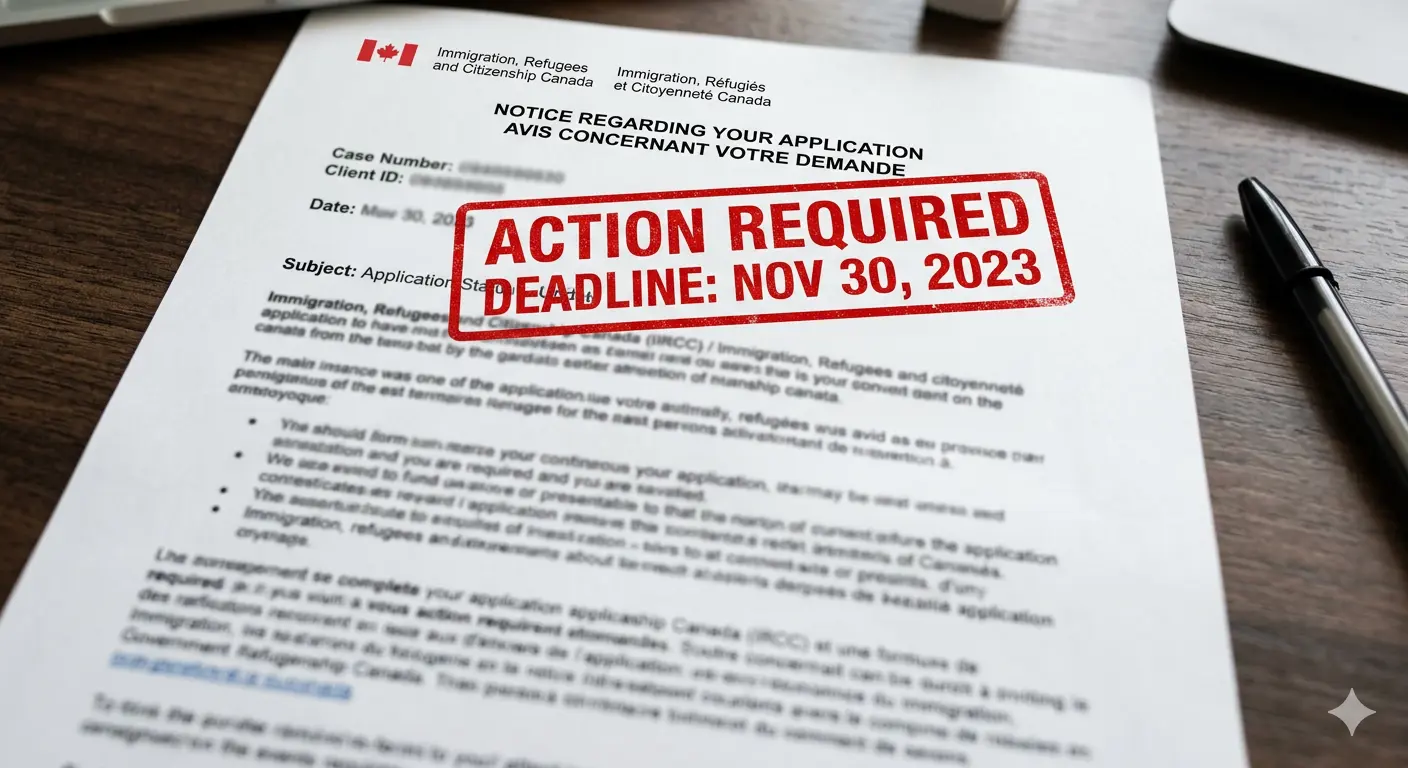
If you received a PR card renewal residency obligation PFL, it means one thing:
The officer reviewing your file is not satisfied that you meet the 730-day residency requirement.
This is not a routine letter.
It is not a friendly request for clarification.
It is a formal notice that refusal is being considered.
At this stage, the officer is already skeptical.
Your response must be structured accordingly.
Why IRCC Issues a PFL in PR Card Renewal Cases
A PFL in a PR card renewal file is most commonly issued when IRCC believes one of the following applies:
1. Possible Failure to Meet the PR Card Residency Requirement
Permanent residents must be physically present in Canada for at least 730 days within a five-year period.
If the officer calculates that you fall short of the 730 days Canada PR threshold, a Procedural Fairness Letter may be issued before refusal.
In these cases, you must either:
Demonstrate that the officer’s calculation is incorrect, or
Present compelling H&C grounds for PR renewal.
There is no informal explanation stage. The response must directly address the legal issue.
Understanding the 730 Days Canada PR Requirement
Permanent residents must accumulate 730 days of physical presence in Canada within any rolling five-year period.
2. Inconsistencies in Travel History
IRCC compares:
Your residency calculator
CBSA entry and exit records
Passport stamps
Previous immigration filings
If there are discrepancies, credibility becomes a central concern.
Once credibility is questioned, the case becomes significantly more difficult.
A PR card renewal residency obligation PFL often indicates that the officer has identified inconsistencies that must be resolved clearly and directly.
3. Weak or Unsupported H&C Grounds for PR Renewal
When a permanent resident does not meet the 730 days Canada PR requirement, the only path forward is discretionary relief based on humanitarian and compassionate considerations.
However, officers assess:
Documentary evidence
Duration of absence
Efforts made to return to Canada
Degree of re-establishment
Hardship if PR status is lost
General explanations are rarely sufficient.
Structured evidence is required.
What a PR Card Renewal Residency Obligation PFL Really Means
A Procedural Fairness Letter is not a refusal.
But it means refusal is being considered.
The officer is effectively asking:
Why should this individual retain permanent resident status despite a residency shortfall?
This is not about sympathy.
It is about legal discretion.
Your submission must show:
Compliance, if possible
Or compelling H&C grounds for PR renewal
Or both
This is the most strategic stage of your case.
How to Respond to a PFL in a PR Card Residency Case
Understanding how to respond to PFL properly is critical.
An effective response is:
Structured
Evidence-based
Directly responsive to the officer’s concerns
Legally framed
It is not:
An emotional letter
A general explanation
A collection of unrelated documents
Your response must address each concern raised in the letter clearly and methodically.
Key Elements of a Strong PFL Response
Correct calculation of the PR card residency requirement
Clear reconciliation of travel history discrepancies
Structured presentation of H&C grounds for PR renewal
Objective documentary evidence
Credibility consistency across all filings
IRCC PFL Response Timeline
The IRCC PFL response timeline is strict.
Most Procedural Fairness Letters provide a deadline ranging from 7 to 30 days, depending on the circumstances.
You must:
Submit a complete response within the deadline
Ensure documentation is organized and clear
Avoid late submissions
Failure to respond on time can result in refusal without further notice.
Extensions may be requested in limited circumstances, but they are not guaranteed.
Time management is critical at this stage.
How IRCC Evaluates Your Response
Officers assess PFL responses using a structured analysis.
They consider:
Credibility
Are your explanations consistent with prior applications?
Have all absences been disclosed?
Do documents align with your declarations?
A single inconsistency can affect the overall assessment.
Objective Evidence
Officers look for documentary support such as:
Medical records
Employment documents
Tax filings
Proof of residence in Canada
School enrollment for children
Banking records
Statements without documentation carry limited weight.
Degree of Re-Establishment
If you are currently in Canada, IRCC evaluates:
Employment stability
Housing arrangements
Family presence
Long-term settlement plans
Temporary or speculative plans are rarely persuasive.
Proportional Hardship
When relying on H&C grounds for PR renewal, the officer assesses whether losing permanent resident status would result in hardship that outweighs the residency breach.
The longer the absence, the stronger the humanitarian case must be.
Common Mistakes in PR Card Residency Obligation PFL Responses
Many refusals occur because of preventable errors:
Emotional narratives without legal structure
Ignoring specific allegations in the PFL
Submitting excessive but irrelevant documentation
Inconsistent timelines
Missing the IRCC PFL response timeline
A weak response can solidify the officer’s concerns rather than resolve them.
When to Seek Legal Help for PFL
You should strongly consider legal help for PFL if:
Your residency shortfall is significant
You have complex H&C grounds for PR renewal
There are credibility issues
Misrepresentation is referenced
You are unsure whether you meet the PR card residency requirement
A PR card renewal residency obligation PFL is not the stage for trial and error.
It is often the final structured opportunity before refusal and possible appeal proceedings.
What a Residency Obligation PFL Usually Signals
By the time IRCC issues a PR card renewal residency obligation PFL, the officer has already:
- Calculated your physical presence under the 730 days Canada PR requirement
- Reviewed CBSA entry and exit records
- Compared your residency calculator with passport history
- Formed preliminary concerns about compliance
Case Pattern Analysis: How PR Card Residency Obligation PFL Cases Succeed or Fail
In practice, PR card renewal residency obligation PFL cases tend to follow recognizable patterns.
Understanding these patterns can help you assess your own situation more objectively.
Pattern 1: Minor Shortfall with Strong Re-Establishment (Often Successful)
Scenario:
30–120 days short of the 730 days Canada PR requirement
Clear reason for absence
Strong employment history in Canada
Tax filings and housing records
Family ties established in Canada
Why these cases succeed:
When the residency shortfall is limited and the permanent resident demonstrates meaningful re-establishment in Canada, officers may exercise discretion under H&C grounds for PR renewal.
The key factors are:
Credible documentation
Consistency across all records
Clear evidence of long-term settlement
In these cases, a structured and well-supported PFL response can reverse the officer’s initial skepticism.
Pattern 2: Significant Shortfall with Weak Documentation (High Risk)
Scenario:
More than one year short of the PR card residency requirement
Long-term residence outside Canada
Minimal tax filings
No employment history in Canada
Reliance on general hardship claims
Why these cases struggle:
Officers assess proportionality.
A significant breach of the 730 days Canada PR requirement requires compelling and well-documented humanitarian justification.
Common weaknesses include:
Vague explanations
No medical documentation
No evidence of attempts to return earlier
Limited ties to Canada
In these situations, a poorly structured PFL response often leads to refusal.
Pattern 3: Travel History Inconsistencies (Credibility Risk)
Scenario:
Residency calculator does not match CBSA records
Undeclared absences
Contradictions with prior immigration filings
In these cases, the issue is not only the PR card residency requirement.
It becomes credibility.
Once credibility is questioned, officers examine the entire file more critically.
A strong IRCC PFL response timeline strategy in these cases involves:
Reconciling every date
Providing documentary clarification
Addressing inconsistencies directly
Avoiding defensive or emotional language
Ignoring discrepancies rarely works.
Pattern 4: Emotional Response Without Legal Structure (Common Refusal Outcome)
Some applicants respond to a PR card renewal residency obligation PFL with:
Personal letters
Emotional explanations
Statements without documentation
Irrelevant attachments
While understandable, this approach does not align with how officers assess files.
IRCC evaluates:
Objective evidence
Consistency
Legal thresholds
H&C grounds for PR renewal
A PFL response must be structured as a submission, not a narrative.
Pattern 5: Timely, Structured, Evidence-Based Response (Strategic Advantage)
The strongest files share common characteristics:
Clear calculation of residency days
Direct response to each concern in the PFL
Organized documentary evidence
Consistent timelines
Credible H&C presentation where necessary
These responses demonstrate understanding of the PR card residency requirement and respect for the officer’s concerns.
In many cases, this structured approach makes the difference between refusal and renewal.
Practical Reality
A PR card renewal residency obligation PFL does not mean the case is lost.
But it does mean the officer is already questioning compliance.
The way you respond determines whether the file stabilizes — or deteriorates.
PFL Response Readiness Checklist
- ✅ Accuracy: Is your physical presence calculation 100% accurate?
- ✅ CBSA Match: Do your logs align perfectly with CBSA entry/exit records?
- ✅ Evidence: Do you have 3+ types of Canadian re-establishment proof?
- ✅ H&C Strategy: Is your humanitarian argument backed by law or just emotion?
Frequently Asked Questions – PR Card Renewal Residency Obligation PFL
Is a Procedural Fairness Letter (PFL) a refusal?
No. A Procedural Fairness Letter is not a refusal. It is IRCC warning you that your PR card renewal may be refused unless you address specific concerns—most often related to the PR card residency requirement, travel history, or credibility.
How many days in Canada do I need to meet the PR residency obligation?
730 days in Canada within the most recent five-year period. If you fall short of the 730 days Canada PR requirement, IRCC may still consider H&C grounds for PR renewal, but only if you provide a strong, evidence-based explanation.
What is the IRCC PFL response timeline?
Usually 7 to 30 days (the exact deadline is written in your letter). IRCC treats the timeline strictly. A late or incomplete response can lead to refusal because the officer may conclude you did not address the concerns in time.
How to respond to PFL for PR card renewal (residency obligation)?
Respond point-by-point with documents. Confirm your day-count calculation, reconcile travel history with stamps/tickets/records, and submit a structured written response that explains the shortfall and addresses credibility concerns. IRCC expects evidence and a clear narrative—not a vague apology.
Can H&C grounds save my PR card renewal if I do not meet 730 days?
Yes, sometimes—but it is discretionary. IRCC considers why you were outside Canada, the size of the shortfall, your establishment in Canada, family ties, and the hardship you would face if you lose PR status. Strong supporting evidence is what makes H&C grounds for PR renewal credible.
When should I get legal help for PFL?
Get legal help for PFL if your residency shortfall is significant, your travel history is inconsistent, or IRCC questions credibility. A PR card renewal residency obligation PFL is often your final chance to correct the record before refusal—strategy and structure matter.